Thought Experiment

Potential gap” equals delta between every person in the world fulfilling full potential in whatever way most suited, vs. today. Think about if every person had access to education, training, nutrition, health care and has the full ability to make maximum contribution in their chosen field.

No coercion. In fact, the opposite to excel at whatever one feels more suited to do. Science, tech, arts, teaching, business, etc. What’s the best way to measure “potential gap” delta in metrics like economic growth, standard of living, rate of advance of science and arts?

These are the stakes we are playing for. This is the big opportunity for the future. This matters more than almost anything else. This is why I reject claims today’s tech industry is not tackling big problems. This is the biggest problem. We are trying to tackle it head on.

How many people on the planet today are in position now to be able to fulfill full potential in chosen fields?

What are the big advances in tech, business, education, health care, other areas, most needed for the next 10, 20, or 30 years?

Bear in mind the great lesson of civilization: Higher economic growth equals more cash available for non-financial-incented activities. So 10-100 times current economy equals at least 10-100 times current funding for nonprofits, arts, social safety net, and everything else we want.

Source: Tweets 1,2,3,4,5,6,7,8,9,10

Who Is C.P. Snow?

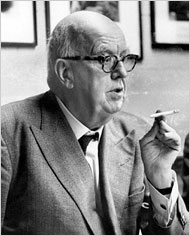
C._P._SnowC.P. Snow was a British chemist, novelist, and government official who gave a famous lecture, “The Two Cultures“, in 1959. The traditional literary culture is behaving like a state whose power is rapidly declining, standing on its precarious dignity.

Whereas the scientific culture is expansive, not restrictive, confident at the roots, certain that history is on its side. Impatient, intolerant, creative rather than critical, good-natured and brash. Neither culture knows the virtues of the other; often it seems they deliberately do not want to know.

Resentment traditional culture feels for scientific shaded with fear; for reverse, resentment not shaded but brimming with irritation. When scientists are faced with an expression of the traditional culture, it tends to make their feet ache.

Snow then implores each culture to seek to understand and embrace the other to come together to improve the world. The same attitude is needed today. Read his entire essay here which is worth reading.

Source: Tweets 1,2,3,4,5,6,7,8,9

Bridging The Divide Between Techies and Non-Techies

Friends in the press are asking me why the Newsweek story has so many techies so upset. I will attempt to explain a generalized view…

  • First, the perpetuation of nerd stereotypes (wording in article, NOT Dorian himself): weird, loner, maladjusted, libertarian, odd hobbies.
  • Second, it transforms what many techies think of as an important tech breakthrough into a human interest freak sideshow devoid of substance.
  • Third, the story attempts to deliberately out the real Satoshi against his/her will, when he/she has done nothing wrong or harmful at all.
  • Fourth, the reporter evidently made little effort to learn anything about Bitcoin or cryptocurrencies, or cryptography or math or programming.
  • Fifth, assuming this story is right, this so-called forensic analysis behind the story is a complete joke.

Each of these would still be offensive to techies *even if the Satoshi story were right*. But if story turns out to be wrong, doubly so. If story is wrong (not saying it is, but if), then even worse: An innocent man was falsely outed, exposed, made vulnerable, and his life was changed forever.

The broader reason this all matters? There’s a growing CP Snow-style divide between techies and non-techies. We must bridge it, not expand it. We must build communication, build rapport, build trust. Many great reporters do this every day and are heroes. More of that, less of this.

Source: @pmarca tweets1,2,3,4,5,6,7,8,9,10

Responses:

Questionable Forensic Analysis of Nakamoto’s Identity

I don’t know who Satoshi is, but I do know this “forensic analyst” simply does not know what she is talking about. First, modern systems designers talk about disk space all the time. It comes up constantly for engineers building large scale systems.

Second, modern systems designers talk about Moore’s Law all the time. It’s one of the key drivers for thinking about scalability over time. In our office at A16Z, there are probably 20 conversations a day about disk space and/or Moore’s Law. And they’re not getting less frequent.

Odd: “Moore’s Law is an old maxim that computing power will double. We’ve gone exponentially away from Moore’s law, [since] that interim period.” You don’t go “exponentially away from” the law that says that what you are dealing with grows exponentially. Who is this person?

Source: @pmarca tweets1,2,3,4,5,6

Responses:

It Doesn’t Matter Who Created Bitcoin

For what it’s worth, the smartest Bitcoin people I know don’t think that the Newsweek story is correct. (I myself don’t know.) In fact, they didn’t think it was correct before Dorian S denied it later in the day. (Again, I myself don’t know.)

My view is that it doesn’t matter who Satoshi is. The ideas stand on their own, the math stands on its own, the code stands on its own.

In general, there is a growing CP Snow-style divide between people who trust math/science/tech and people who trust people/institutions. Bitcoin is a perfect flashpoint instance of the divide. All the smartest computer scientists I know don’t think Satoshi’s identity matters.

A challenge for the general press–and business press–is to hire/train more reporters who are on the math/science/tech side of the divide. It is going to get far harder to understand–or explain–the world from here for people who aren’t deep in math/science/tech.

Corollary: It is becoming much more important for math/science/tech people to be able to explain things to non-math/science/tech people.

Important: Within the technology community, libertarians are a small minority. The “typical” US Silicon Valley technologist is mostly a normal Democrat.The idea that most computer/Internet people now are raving anti-government libertarian anarchists is simply wrong. It’s a false caricature.

Source: Andreessen’s tweets – 1,2,3,4,5,6,7,8,9,10

Responses:

Netscape Memories (Part 3)

Jim Clark and I start planning the company that became Netscape. But first it is important to remember how universally scorned and dismissed the Internet’s prospects for business and consumer use were 20 years ago. The prevailing view at the time was the Internet was only for scientists and nerds. Consumers would get “interactive TV” and the “information superhighway“. This negative view of the Internet was widely shared within the tech industry, telecom industry, media industry, government, and press with a few exceptions.

So, not wanting to be stupid, Netscape business plan number one was: Consumer software for interactive television! Great idea, but then we looked at the market in the cold light of day: We decided it was hard to build a software company for a 60 unit install base.

Nintendo 64

Nintendo 64

On to plan number two: Create online multiplayer gaming service for revolutionary new Nintendo 64 console, powered by SGI 3D chip. Very exciting. Then we looked at the market in the cold light of day: We decided it was hard to build software for hardware that wouldn’t ship for two and a half years. After those two failed starts, we almost packed up and went home. We were frustrated and out of brilliant ideas. (To be continued.)

Notable responses from Andreesen’s followers:

Source: Tweets – 1,2,3,4,5,6,7,8,9

Netscape Memories (Part 2)

I had graduated from UIUC in December of 1993 and moved to SV in January of 1994. Immediately realized Palo Alto equaled heaven on earth. Mosaic/web grew crazy fast between January of 1993 to December of 1993 yet virtually nobody believed the web would be a consumer medium or business opportunity at the time. So in late 1993, I posted my resume to the Mosaic “About” screen, and got a dozen job offers split between East and West coasts.

My first (and only) job in SV was as a programmer at a wonderful small software/consulting company called EIT. Did early eCommerce work. Two months in, Jim Clark emails me:

I hear you did Mosaic and are in the Valley; let’s get together at 7AM on Sunday at Cafe Verona.

The email caused two immediate thoughts. First, oh my God, the number one entrepreneur in Silicon Valley wants to meet. You bet I’ll be there at 7AM on Sunday. Second, oh my god, I haven’t been up before noon on a Sunday for at least five years. I have to go buy extra alarm clocks! Somehow dragged my rear out of bed and ingested a large quantity of caffeine at 6AM on Sunday and made it to Cafe Verona just in time.

Jim Clark walks in, sits down, introduces himself and says:

I want to start a new company and I’m looking for cofounders.

To be continued…

Notable responses from Andreesen’s followers:

https://twitter.com/MasterMarquette/status/440540693363044353
https://twitter.com/dangillmor/status/440541507142316032

Source: Tweets – 1,2,3,4,5,6,7,8,9

Exponential Decay Curve

Dittoheads

photo credit: Jezlyn26cc

It is so interesting to tweet on the NSA/Snowden affair and disagree with Glenn Greenwald’s ideological positions even a little bit. If he picks it up and retweets it, there’s immediately this massive flying squirrel onslaught tweet attack by hundreds of his followers. Very few of whom have original thought but lots of curse words, ad hominem attacks, and spelling and grammar mistakes. Attack tweet volume follows perfect exponential decay curve, unless Glenn fires them up again, then starts over.

This does not happen for any public Twitter figure or any other topic that I have seen. It is specific to Glenn and his cult following. But it kept nagging at me, I’ve seen this before, and then I figured it out. Rush Limbaugh and his dittoheads! The inescapable conclusion is clear: Glenn Greenwald is Rush Limbaugh for our time. Strap in, it’s going to be quite a ride.

https://twitter.com/pmarca/status/440372746149584896
https://twitter.com/pmarca/status/440375624486502400 https://twitter.com/pmarca/status/440381144127647744

Source: Tweets – 1,2,3,4,5,6,7,8,9,10

Press on Bitcoin and Crypto-Currencies

What passes for a good press column on Bitcoin and crypto-currencies in early 2014: Our Flawed Financial System is Reflected in Bitcoin.

  • Opening giant photo of physical gold coins that completely misrepresents the topic being discussed — CHECK!
  • Preemptive and condescending sneering that Bitcoin could be useful in any way — CHECK!
  • Nearly willful ignorance about technical specifics about Bitcoin, such as divisibility — CHECK!
  • Handwavy praising of a theoretically far superior system (“Bitnote”) that does not actually exist — CHECK!

And yet, some really good macro points that are worth considering — which is what makes it a good piece on balance. Pieces like this read IDENTICALLY to comparable pieces 20 years ago about the Internet, even the same sequence of points! So fascinating.

Source: Tweets – 1,2,3,4,5,6,7

Netscape Memories (Part 1)

Twenty years ago this month, Jim Clark and I were planning the company that became Netscape. In the coming months, I may post the occasional memory from that time! To start, some thoughts on Jim Clark himself…

When I came to Silicon Valley in 01/94, Jim Clark was regarded like Elon Musk or Larry Page today. Top-top-top tech visionary and entrepreneur. Jim’s first company, Silicon Graphics Inc (SGI), was viewed much like Google today – the tech powerhouse all the genius engineers wanted to join. SGI invented modern 3D computer graphics-from Jurassic Park to today’s Call of Duty and Oculus Rift, including core tech “GL” (now OpenGL).

Jim had been a professor at Stanford. He and his grad students spun off into SGI and created entirely new worlds, one of best SV companies ever. Jim is a Silicon Valley renaissance man: academic, inventor, entrepreneur, business builder, visionary, marketer, leader, philanthropist.

My great stroke of luck happened when Jim left SGI in 1993, stayed on the SGI board and so couldn’t recruit cofounders for the next company out of SGI. This changed my life, since there were easily hundreds or thousands of SGI engineers way better than me! But Jim needed new blood. And so Jim’s desire to start a new company and his inability to recruit from SGI led to The Email that turned into Netscape. To be continued…

Source: Tweets – 1,2,3,4,5,6,7,8,9,10